


My rating: 5 of 5 stars
Don’t Look Now, The French Lieutenant’s Woman
Reverse psychology is a practical ploy for anyone to get an unsuspecting victim to do as he/she desires. But could this tactic work effectively in a novel?


Can a reader be told by a novelist within the confines of the formal novel that the story is an imagination and yet the reader still believes that the characters are as real as any human being?

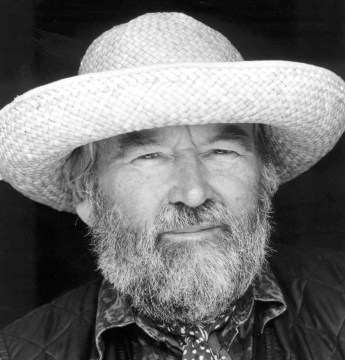
In The French Lieutenant’s Woman John Fowles answers these types of questions and challenges the Victorian and conventional forms of the novel by doing two things really well: first, he makes it very clear he is a postmodern novelist telling a story about imagined characters living in the Victorian era; second, Fowles provides two endings for the exact same characters.
John Fowles breaks from convention in his novel The French Lieutenant’s Woman by taking a form of the Victorian novel and adapting it with twists using postmodern and unconventional techniques within the story. Regardless, the story remains beautiful and believable.
“The sense of the beautiful,” however, is derived from an awareness and understanding “accompanied by that particular feeling of release” and establishes a beauty which is “the truth of feeling” (Gardner, On Moral Fiction 144).


In Chapter 13 Fowles creates this “feeling of release” by breaking from the conventional storytelling method; he ends up spending four pages advising the reader that the characters are not real but that they are alive:
This story I am telling is all imagination. These characters I create never existed outside my own mind. If I have pretended until now to know my characters’ minds and innermost thoughts, it is because I am writing in… a convention universally accepted at the time of my story:
that the novelist stands next to God… if this is a novel, it cannot be a novel in the modern sense of the word… We also know that a genuinely created world must be independent of its creator; a planned world… is a dead world. It is only when our characters and events begin to disobey us that they begin to live.
When Charles left Sarah on her cliff edge, I ordered him to walk straight back to Lyme Regis. But he did not; he gratuitously turned and went down to the Dairy…In other words, to be free myself, I must give him, and Tina, and Sarah, even the abominable Mrs. Poulteney, their freedoms as well. There is only one good definition of God: the freedom that allows other freedoms to exist. And I must conform to that definition (95-96).


E.M. Forster warned against this in Aspects of the Novel:
“May the writer take the reader into his confidence about his characters? Answer has already been indicated: better not… It is confidences about the individual people that do harm, and beckon the reader away from the people to an examination of the novelist’s mind” (81-82).


Then, let us argue that if Fowles had not broken the conventional storytelling method, the narration and the tale would have continuously maintained the highest form of art in literature.
The scenes and characters are well-crafted. The time and setting in a Victorian England well studied and conveyed. The reader, however, would always have in the back of his/her mind the awareness that the novel, The French Lieutenant’s Woman, is a dead thing, a book to be read and studied but a thing not of its own accord, not alive and free from the novelist’s strings of manipulation; in basic terms, an overly sentimental novel with a fairytale ending that defies the laws of reality during a highly formal time period.


But when Fowles deliberately and skillfully cuts those strings over the characters and plot, the novel begins to become more alive and, arguably, more than simple imagination, more than sentiment. The novel and its characters become free and beautiful, not melodramatic and sentimental.
By stating the obvious, “this story I am telling is all imagination,” and by freeing the characters from the novelist’s will, Fowles is able to establish a deeper truth than what the novel could have done if it had maintained an author writing a novel with the expected conventions.


Nevertheless, Fowles is not satisfied with removing himself from the unfolding of events and granting the characters of The French Lieutenant’s Woman free will. He takes the story to a new level by providing two very distinct endings, both as real as the other. Fowles argues to himself and to the reader:
Fiction usually pretends to conform to the reality: the writer puts the conflicting wants in the ring and then describes the fight—but in fact fixes the fight, letting that want he himself favors win. And we judge writers of fiction both by the skill they show in fixing fights (in other words, in persuading us that they were not fixed) and by the kind of fighter they fix in favor of:
the good one, the tragic one, the evil one, the funny one, and so on…The only way I can take no part in the fight is to show two versions of it. That leaves me with only one problem: I cannot give both versions at once, yet whichever is the second will seem, so strong is the tyranny of the last chapter, the final, the “real” version (406).

In this writer’s and reader’s opinion, Fowles fails at this last statement; the first ending, for me, where Sarah presents Charles with his daughter who is only a toddler is far lasting and more real than the final version because Fowles foreshadows the event when Charles visits a prostitute similar in appearance and discovers the woman’s child:
“Holding the small body on his knees he dandled the watch in front of the now eager small arms. She was one of those pudgy-faced Victorian children with little black beads for eyes; an endearing little turnip with black hair” (319).


An identical scene with Charles and his daughter takes place in the first of the two endings: “He fumbled hastily for his watch, as he had once before in a similar predicament. It had the same good effect; and in a few moments he was able to lift the infant without protest and carry her to a chair by the window” (457).
It would appear that there was some fight fixing by the writer after all. Without the former scene to foreshadow the first ending with Charles and his infant daughter, the last ending might have become a more viable outcome for the novel, but concludes with being more a forethought than an afterthought of the first ending. A reader might argue that a novel simply cannot have two endings.


John Gardner in The Art of Fiction provides some relief to just such an argument: “The reality of the world of the tale, in other words, is that of a moral universe. What ought to happen, possible or not, does happen” (73).
The two alternate endings are not possible for a narration that should adhere to the laws of verisimilitude, but, as Gardner states, what should happen does happen. Both endings are as real for the reader as the possibilities they ascertain.

In The French Lieutenant’s Woman John Fowles shows his love for crafting and telling stories. The pleasure in allowing his words to break from convention by taking a Victorian themed novel and producing a postmodern work of art shows on every page, especially at the close of the book with two separate endings for Charles and Sarah.
“The true writer’s joy in the fictional process,” Gardner writes, “is his pleasure in discovering, by means he can trust, what he believes and can affirm for all time” (The Art of Fiction 81).


Fowles does exactly this. He allows himself to discover his characters by opening himself and the reader up to the characters’ possibilities—a brave but necessary act from a writer; and Fowles illustrates how breaking from convention can establish new forms of writing, new shapes of verisimilitude.
When he points to the sky and says, “Don’t look!” The tempted reader must look and, thereby, becomes satisfied because he/she knows the truth and the lie, despite what others, perhaps publishers and editors, believe to be proper.

Nevertheless, I will happily admit that Fowles is a brilliant writer and one of my all-time favourite because he dares to push the limits of writing and does not follow archaic literary traditions but braves the waters of his own talent, of his own limits, of his own possibilities. And that is also why The French Lieutenant’s Woman is one of my favourite books, despite how harsh I may have sounded in my review in its use of meta-fiction.
This book is a must read, at least once before you head off into that final sunset.
Bibliography:
Gardner, John. The Art of Fiction (1984). New York: Vintage Books, 1991. Print.
—. On Moral Fiction (1978). New York: Basic Books, 2000. Print.
Forster, E.M. Aspects of the Novel (1927). New York: Harcourt, Inc., 1985. Print.
Fowles, John. The French Lieutenant’s Woman (1969). New York: Bay Back Books, 1998. Print.


